
se pare ca eu sunt frate cu kokolino la inceputuri, la un consum de peste 12% in buc.
pana acum am incercat sa schimb vitezele undeva un pic peste 3.000 rot si cred ca de aici se trage plus traseul ffff aglomerat dimineata si seara.
Consum kia cee'd

si la mine la fel.mpatachia wrote:em am media de 11 km/h

cand am avut 26 km/h (2 zile in calarasi) am avut 7%.... ce viata...
1.6 DSL LP Base Pewter Beige + optionale
vrrrrroooooommm !!!!!! vrrrrroooooommm !!!!!!
www.erepublik.com
vrrrrroooooommm !!!!!! vrrrrroooooommm !!!!!!
www.erepublik.com

am prins spilul dimineata si prind un pic mai liber... (plec pe la 9,15 pentru ca am avantajul ca incep serviciul la ora 10 si aproape ca nu e blocaj pe dorobanti) si seara ajung atat de tarziu ca mi se intampla rareori sa prind trafic .... plus ca fac tot posibilul sa ocolesc stefan cel mare si magheru...
mi s-a infundat aseara cand am facut 2 (doua) ore si 10 minute de la baneasa pana in romana... oricum, ma gandesc foarte serios sa-mi achizitionez una bucata bicicleta - ca si-asa au facut pistele alea... pacat ca vine iarna!!!!!!!
mi s-a infundat aseara cand am facut 2 (doua) ore si 10 minute de la baneasa pana in romana... oricum, ma gandesc foarte serios sa-mi achizitionez una bucata bicicleta - ca si-asa au facut pistele alea... pacat ca vine iarna!!!!!!!
1.6 CRDi TX Comfort Black Pearl
@ Ioana:
te apropii de stilul in care se da consumul in oras standard. deci care este consumul?
citate din wikipedia:
2007 procedure:
Two separate fuel economy tests simulate city driving and highway driving: the city driving program consists of starting with a cold engine and making 23 stops over a period of 31 minutes for an average speed of 20 mph (32 km/h) and with a top speed of 56 mph (90 km/h); the highway program uses a warmed-up engine and makes no stops, averaging 48 mph (77 km/h) with a top speed of 60 mph (97 km/h) over a 10 mile (16 km) distance. The measurements are then adjusted downward by 10% (city) and 22% (highway) to more accurately reflect real-world results. A weight average of city (55%) and highway (45%) fuel economies is used to determine the tax.
New 2008- EPA testing procedure:
As a means of reflecting real world fuel economy more accurately, the EPA adds three new tests [7] that will combine with the current city and highway cycles to determine fuel economy of new vehicles, beginning with the 2008 model year. A high speed/quick acceleration loops lasts 10 minutes, covers 8 miles, averages 48 mph and reaches a top speed of 80 mph. Four stops are included, and brisk acceleration maximizes at a rate of 8.46 mph per second. The engine begins warm and air conditioning is not used. Ambient temperature varies between 68 to 86 degrees Fahrenheit.
The air conditioning test raises ambient temperatures to 95 degrees Fahrenheit, and the vehicle's climate control system is put to use. Lasting 9.9 minutes, the 3.6 mile loop averages 22 mph and maximizes at a rate of 54.8 mph. Five stops are included, idling occurs 19 percent of the time and acceleration of 5.1 mph/sec is achieved. Engine temperatures begin warm. Lastly, a cold temperature cycle uses the same parameters as the current city loop, except that ambient temperature is set to 20 degrees Fahrenheit.
Last edited by sorinh on 02 Nov 2007, 17:13, edited 1 time in total.
1.6 DSL LP Base Pewter Beige + optionale
vrrrrroooooommm !!!!!! vrrrrroooooommm !!!!!!
www.erepublik.com
vrrrrroooooommm !!!!!! vrrrrroooooommm !!!!!!
www.erepublik.com
CB-ul a fost resetat dupa ce am luat masina din service ?i ajunsese exclusiv in bucuresti pe la 9%sorinh wrote:@ Ioana:
te apropii de stilul in care se da consumul in oras standard. deci care este consumul?
pe bord acum e 6,8 dar am iesit din bucuresti pana la targoviste si inapoi...
cand m-am intors aveam 6,4 (asta se intampla pe 21 oct.) si aseara a urcat la 6,8% dupa cele doua ore in coloana...
1.6 CRDi TX Comfort Black Pearl
multumesc!
1.6 DSL LP Base Pewter Beige + optionale
vrrrrroooooommm !!!!!! vrrrrroooooommm !!!!!!
www.erepublik.com
vrrrrroooooommm !!!!!! vrrrrroooooommm !!!!!!
www.erepublik.com
Articol din AMS Germania
Kia Cee'd 1,4 against Cee'd 1,6 CRDi
Diesel or Benziner: When counts itself which? How does one have to drive many kilometers with, but the consumption-more favorable Diesel more expensive in the acquisition, in order to save, and for whom rather the Benziner is worthwhile itself? By the example of the Kia Cee’D answer car engine and sport the matter of price.
In the compact class the Kia Cee D’with its favorable tariffs aims at price-sensitive customers. 109 HP strong Cee D 1,4 with’petrol engine offers the entrance for 14.300 euro. If it should be a comparable Diesel, must be spent however nearly 25 per cent more, because the Cee’D 1,6 CRDi with 115 HP costs 3,485 euro specially. There the question arises naturally whether the substantial addition is justified.
If one buys the Diesel over to save, the answer reads no. Because not only the absolute height of consumption, but also the difference in favor of the Diesel (0.7 L/100 km) move on the level of the competition. Only starting from an annual road performance of 30,000 kilometers is one with the self fuze more favorably on the way than with the Benziner. So many kilometers become however the few compact car drivers in the year abspulen. The fact that the Diesel counts itself with’the Cee D not rather hangs with the cost differences when acquisition and maintenance together, into which also insurance, maintenance, depreciation and taxes with flow.
The turbo-Diesel has fires
But that is only the half truth, at least if alone over schnoeden Mammon is not. A view of the accompanying data table lets the most important difference suspect already. The Diesel heaves nearly twice as much Newtonmeter on the crankshaft like the Benziner, so that the CRDi driver can surfen after overcoming minimum starting weakness pleasantly switchingputridly on the wave of torque. At upward gradients must be shifted back hardly once, and overhauling procedures are settled without large trouble. Vibrations are not completely strange to the four-cylinder, but they are never real disturbing. Only starting from approximately 160 km/h the Diesel catches to hum vernehmlich on, while it holds back itself otherwise acoustically to a large extent.
The 1,4-Liter-Benziner develops against it only mild strength. At the traffic light this Cee D’starts somewhat betulich, and when overhauling he gives himself as flexibly as old chewing rubber. But it runs cultivated, vibration-poor and quietly, if one refrains from the roar around 130 km/h. If one leaves sufficiently time to it, he accelerates the Cee’D on nearly 190 km/h. Who likes it gladly calmly and favorably, 1,4 becomes luckier with that. One buys the turbo-Diesel against it rather because of the fire, even if one can drive thereby on low flame.
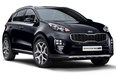
BZ-21-NBA, Sportage 1.6 TGDI 7DCT Gt-line black pearl sosit 07.11.2017, 50000 km
Bz-07-NBA, Xceed 1.5 TGDI 7DCT Style plus MY21, 25000 km
Bz-07-NBA, Xceed 1.5 TGDI 7DCT Style plus MY21, 25000 km